Faculty
2025: Werner-von-Siemens-Fellow
2025: ERC Starting Grant
2024: GI Junior-Fellow
2024: Busy Beaver Award "Differential Privacy: Mathematical Foundations and Applications in Machine Learning“, Saarland University
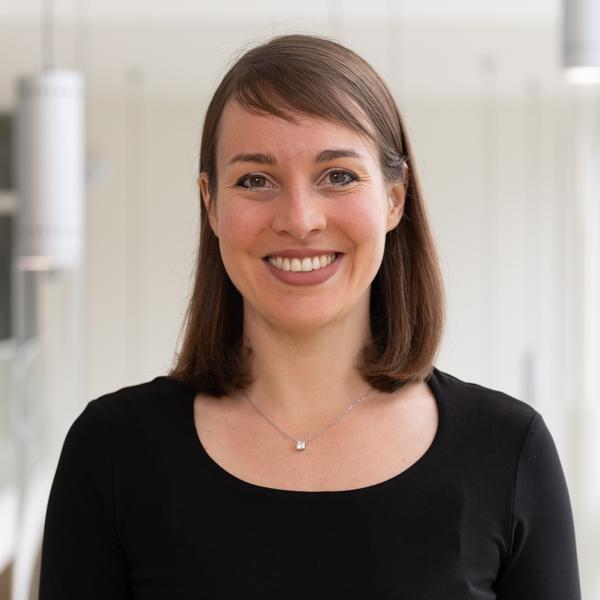
Franziska Boenisch is a tenure-track faculty member at the CISPA Helmholtz Center for Information Security. At CISPA, she co-leads the SprintML Lab (Secure, Private, Robust, Interpretable, and Trustworthy Machine Learning), where her research focuses on advancing trustworthy machine learning. Prior to joining CISPA, she was a Postdoctoral Fellow at the Vector Institute for Artificial Intelligence, working under the supervision of Prof. Dr. Nicolas Papernot. She received her PhD from Freie Universität Berlin, where she also served as a research associate at the Fraunhofer Institute for Applied and Integrated Security (AISEC).
IEEE Conference on Computer Vision and Pattern Recognition (CVPR) CDI: Copyrighted Data Identification in Diffusion Models
International Conference on Machine Learning (ICML) Unlocking Post-hoc Dataset Inference with Synthetic Data
International Conference on Machine Learning (ICML) Efficient and Privacy-Preserving Soft Prompt Transfer for LLMs
International Conference on Machine Learning (ICML) Privacy Attacks on Image AutoRegressive Models
International Conference on Learning Representations (ICLR) Precise Parameter Localization for Textual Generation in Diffusion Models
National Conference of the American Association for Artificial Intelligence (AAAI) Differentially Private Prototypes for Imbalanced Transfer Learning
International Conference on Learning Representations (ICLR) Captured by Captions: On Memorization and its Mitigation in CLIP Models
International Conference on Learning Representations (ICLR) Differentially Private Federated Learning with Time-Adaptive Privacy Spending
European Conference on Artificial Intelligence (ECAI) Efficient Model-Stealing Attacks Against Inductive Graph Neural Networks
NeurIPS-Workshop (NeurIPS-W) Auditing Empirical Privacy Protection for Adaptations of Large Language Models